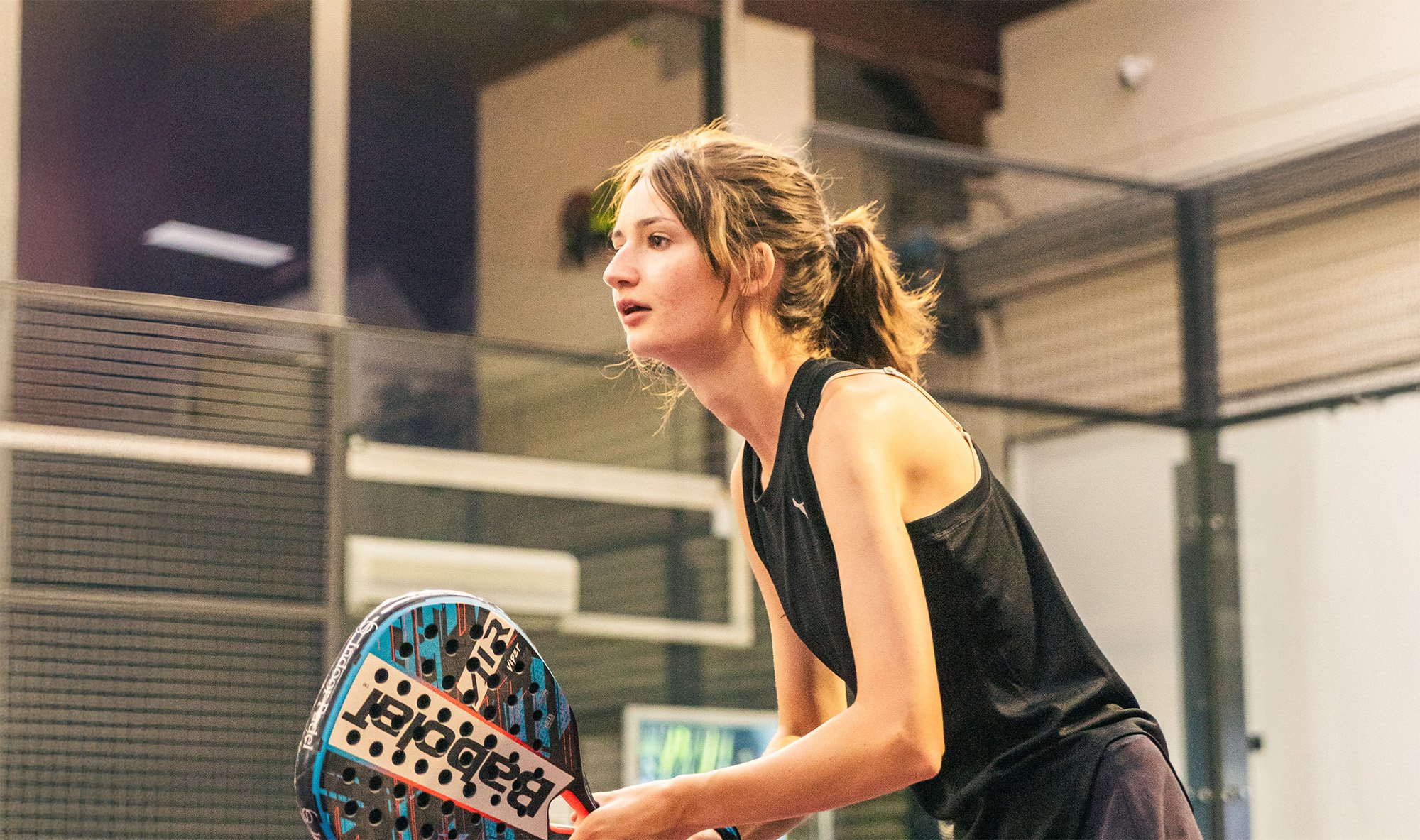
Rules, scoring, technique, and strategy. Everything you need from first session to competitive play.
Padel is a racket sport played in doubles on an enclosed court roughly one-third the size of a tennis court. Glass walls and mesh fencing surround the court, and the ball can be played off these walls — similar to squash. The serve is always underhand, making it immediately accessible to beginners.
Stand behind the service line. Bounce the ball and hit it at or below waist height. Serve diagonally into the opposite service box. Two serves allowed (like tennis). The ball must bounce in the service box before hitting any wall.
After the serve, the ball must bounce once before being returned. After that, volleys are allowed. The ball can only bounce once on each side. After bouncing, the ball can hit walls and still be returned — this is the key difference from tennis.
Identical to tennis: 15, 30, 40, game. Six games wins a set. Best of three sets for competitive matches. Many clubs and tournaments use "golden point" at deuce — one sudden-death point where the receiving team chooses which side to receive on.
You win the point when the ball bounces twice on the opponent's side, they hit into the net, or the ball goes out of the court boundaries.
Bring court shoes (non-marking soles), water, and sports clothing. Most clubs hire out rackets for $5-10. Don't buy your own until you've played several times.
Focus on getting the ball over the net consistently. Don't worry about power — placement and control win points in padel. The underhand serve means everyone can serve from the first minute.
Continental grip — like shaking hands with the racket. Same grip for forehand and backhand. Always wear the wrist strap.
Shorter swings than tennis. Keep the racket face slightly open. Stay on the balls of your feet.
When the ball bounces then hits the back wall, let it come off before swinging. The most common mistake is turning to hit the ball as it goes toward the wall. Wait for it to come back to you.
The net is where you win points. Both partners should move together — both up or both back, never split. The lob is the most important shot for pushing opponents away from the net. Control beats power at every level of the game.